
10 Reasons Homeowners Are Putting SafeSense in the Rooms Their Ceiling Alarms Never Reach
A plain look at what a plug-in monitor actually does, and where it earns its outlet.

Summary: most homes have alarms on the ceiling and nothing at all at eye level. SafeSense is a plug-in monitor that shows carbon monoxide, combustible gas, temperature and humidity as live numbers on one screen, and sounds a 100 dB siren when a reading climbs.
It is a second layer, not a replacement for your certified alarms. Here is what it does and where it is worth having.
1. The rooms your ceiling alarms never reach
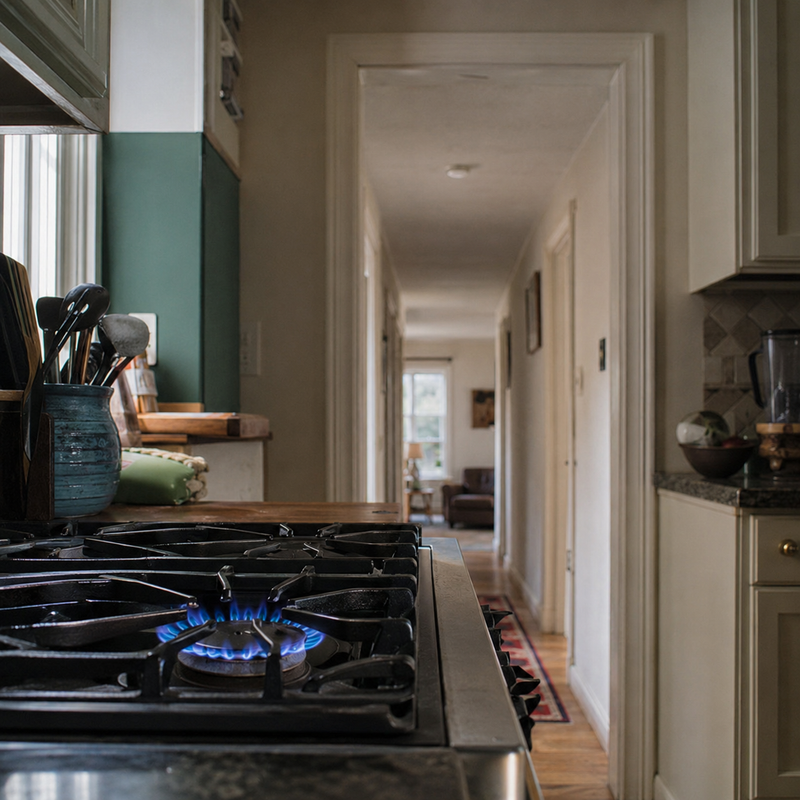
Your smoke and CO alarms are on the ceiling, usually in a hallway, usually where nothing ever happens. The gas range, the water heater, the car idling in the attached garage, the propane fridge in the trailer: the sources are all at counter and floor level, in rooms that hallway alarm was never positioned for.
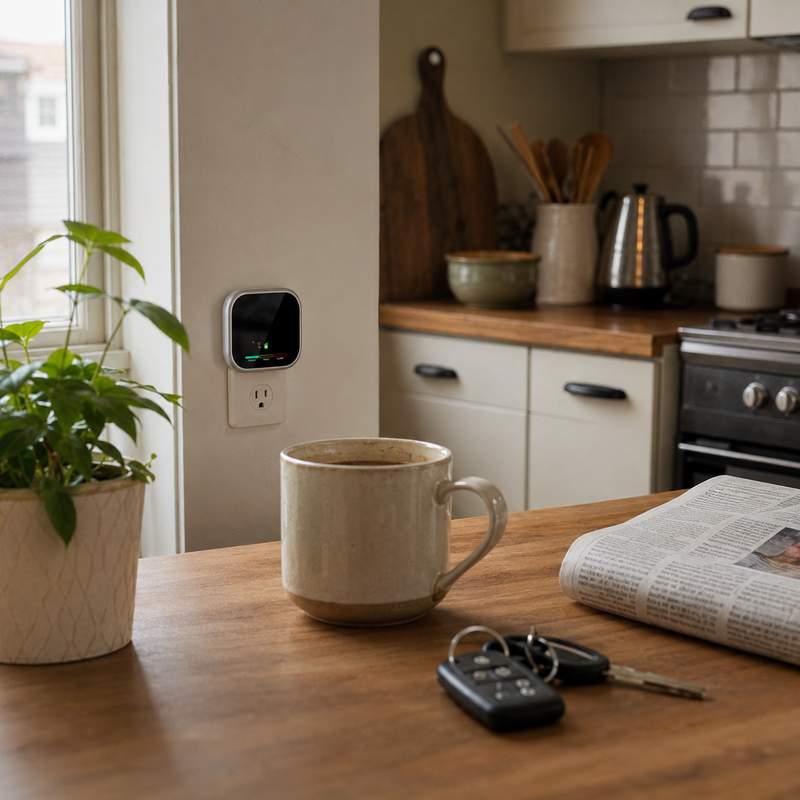
SafeSense plugs in where the risk actually is, at eye level, in the room you are standing in.
2. You get a number, not just a siren
A standard alarm has one job and two states: silent, then screaming. It tells you nothing on an ordinary Tuesday.
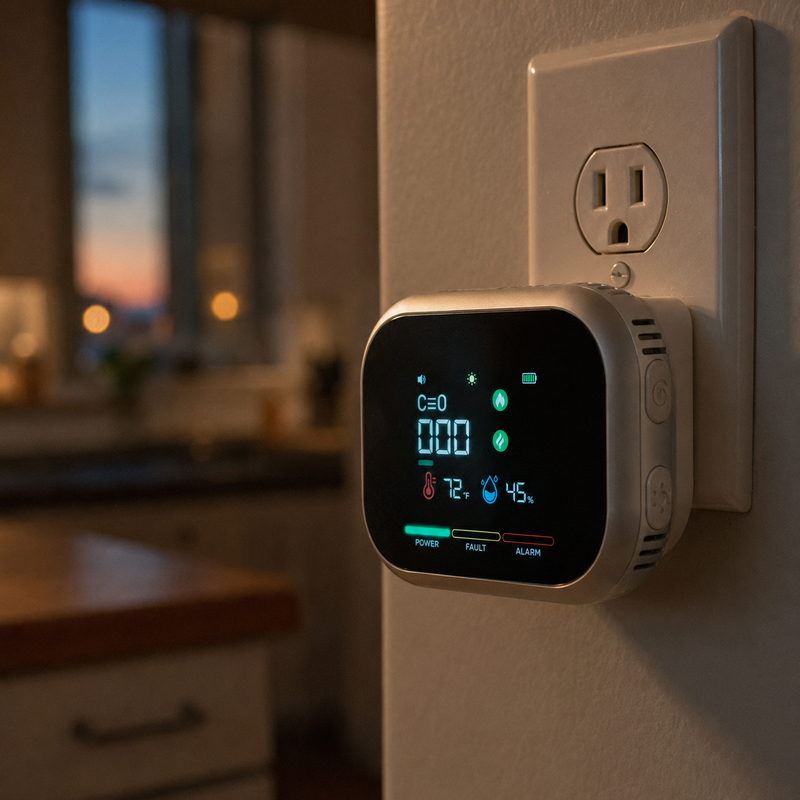
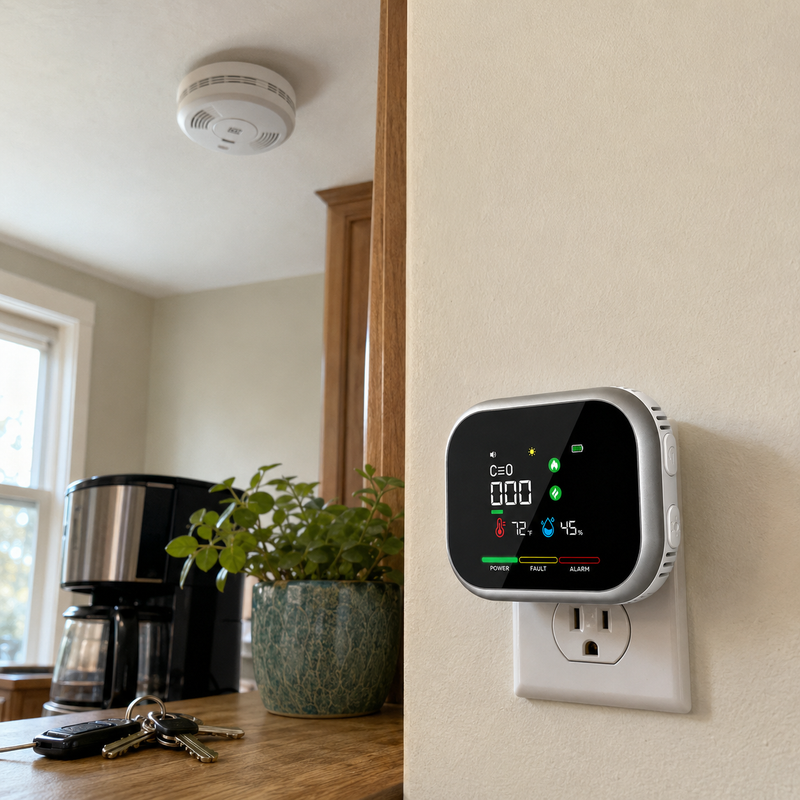
SafeSense shows carbon monoxide in ppm, combustible gas level, temperature and humidity, continuously, on a 2.8 inch screen. You glance at it the way you glance at a clock. Most people find a visible baseline more reassuring than silence ever was.
3. The gap was never detection. It was coverage.
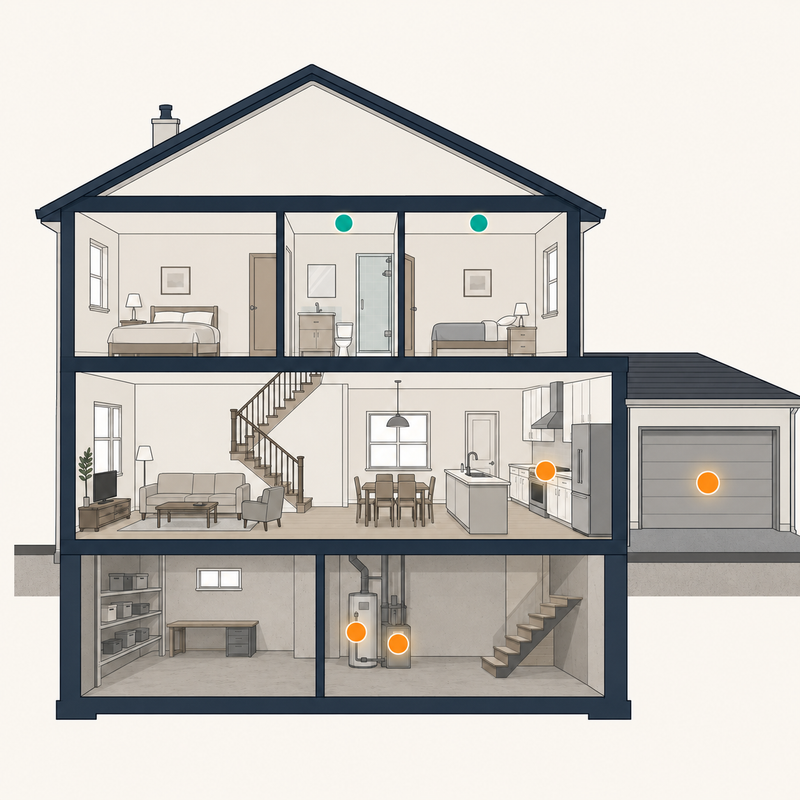
Most homes have alarms in a hallway and outside the bedrooms, because that is what code required when the house was built. The NFPA has recommended CO alarms on every level of the home for years, and most states have written some version of that into law — but the requirement usually applies to new construction and rentals, not the house you already live in. Nobody made you retrofit.
Adding certified alarms where your state requires them is step one, and you should do it. SafeSense goes in the rooms in between, where you want eyes rather than another unit on the ceiling.
4. Four readings, one outlet
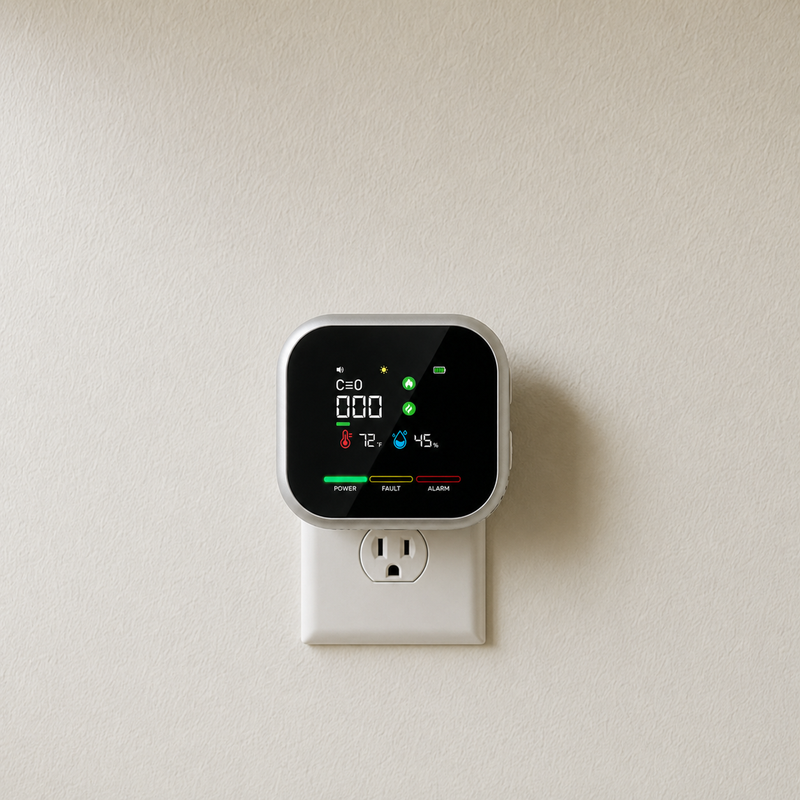
Carbon monoxide, combustible gas (LPG, methane, propane), temperature and humidity, all on one screen from one plug.
Humidity matters more than people expect. A basement sitting above 60 percent is a mould problem forming quietly. A nursery below 30 percent in February is why the baby keeps waking up. Nothing else in the house tells you all four at once.
5. It is reading the room inside a minute
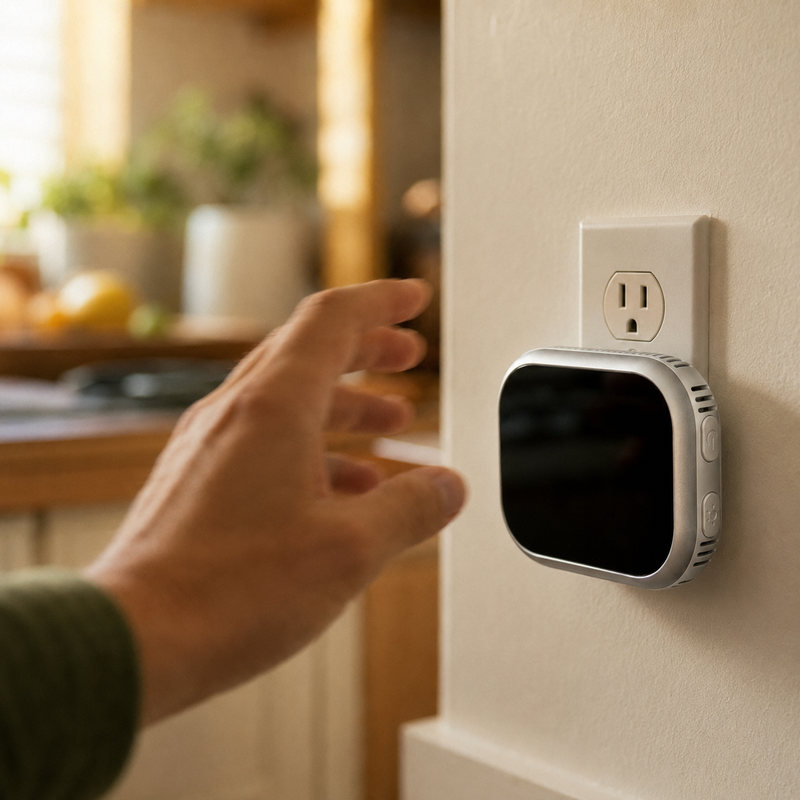
Plug it in. The sensors warm up, the display comes on, and you have your baseline before you have walked back to the kitchen. No app, no pairing, no account, no wiring, no drilling.
The magnetic base means it comes off the wall and goes on the fridge, the toolbox, or into the RV for the weekend.
6. 100 dB, and it stays awake through a blackout
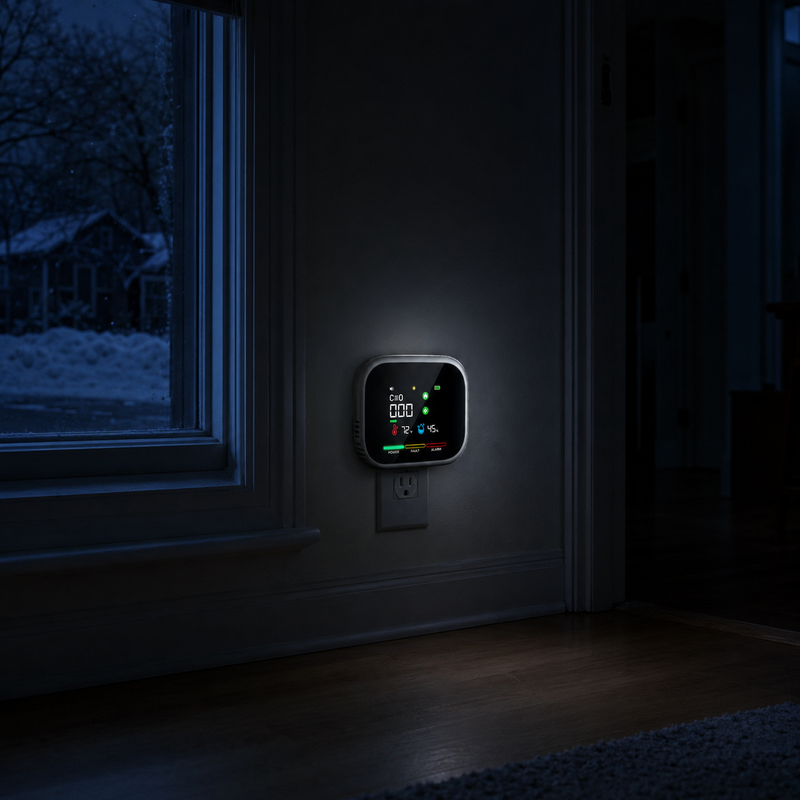
The siren is rated at 100 decibels, louder than a typical smoke alarm and audible through a closed door.
The built-in rechargeable battery keeps it monitoring when the power drops, which is the part that matters. A power cut is exactly when people fire up generators, camp stoves and kerosene heaters. That is the highest-risk hour of any winter storm, and it is the hour most plug-in devices go dark.
7. Designed to Complement Your Existing Alarms
SafeSense adds an extra layer of everyday visibility by providing live environmental readings in the rooms where you spend the most time.
Simply plug it into a nearby outlet to monitor conditions at a glance without an app, complicated setup or permanent installation.
8. One button, once a week, and you know it is alive
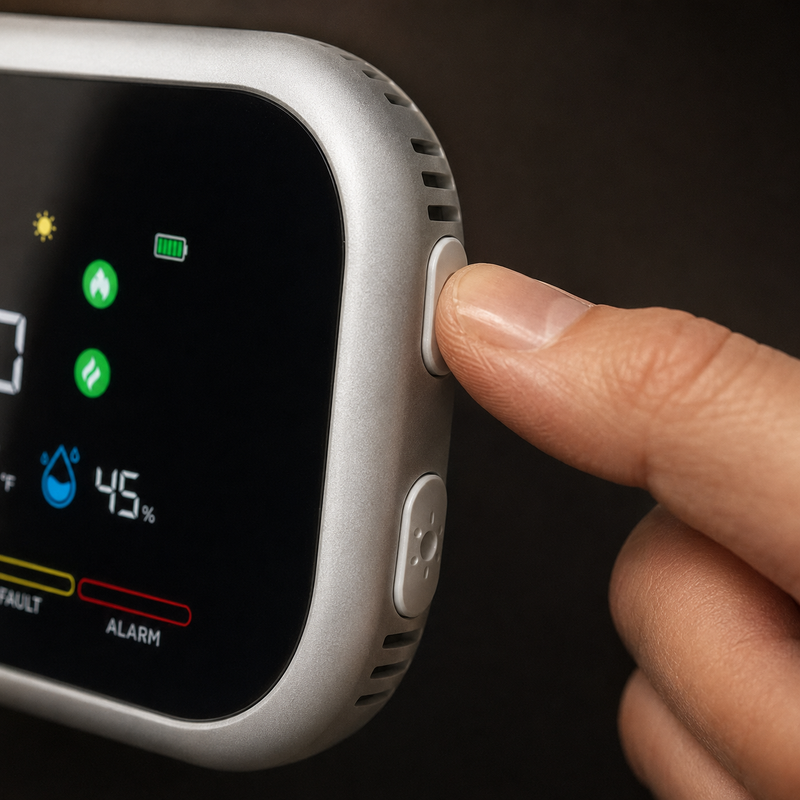
The self-test button checks the sensors, the siren and the display in a single press. Ten seconds a week and you know the unit is working.
Which is more than most people can say about the alarm on their ceiling, the one with the battery somebody pulled out in 2021 and never put back. Draw is under 2 watts, so leaving it plugged in permanently costs roughly nothing.
9. 30 days to decide. Return it for any reason.
Plug it in and live with it for a month. Watch what the numbers do when you run the oven, when you start the car in the garage, when the furnace kicks on for the first cold night.
If it is not telling you something you value, send it back inside 30 days for a full refund. No restocking fee and no interrogation.
10. Join the 1000+ households already watching the number
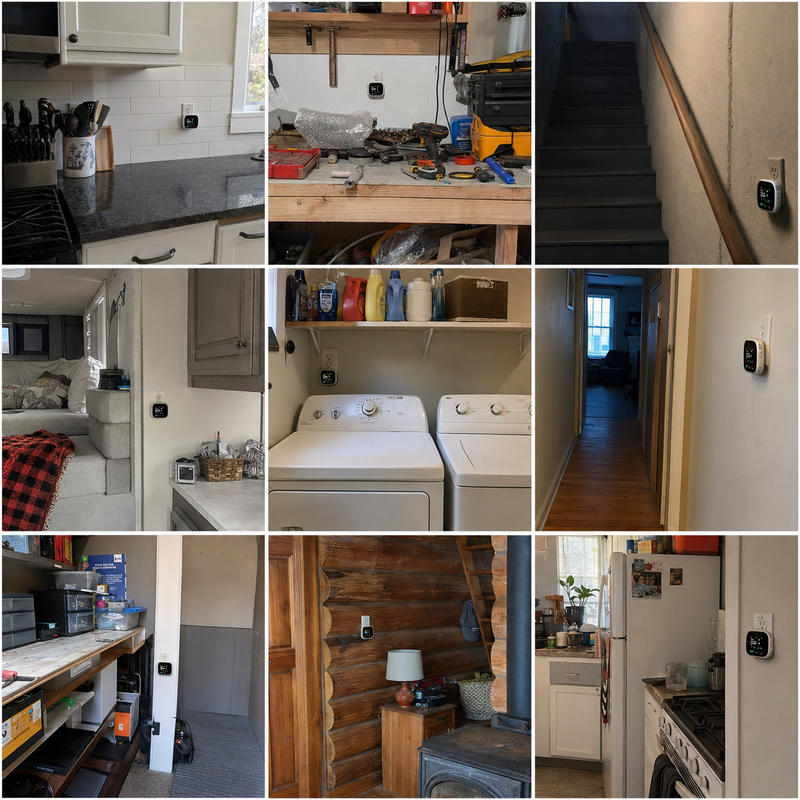
Most of them are not nervous people. They are RV owners who winter south. Renters who cannot touch the building's alarms. People who bought a house with a gas range and realised nothing in that kitchen tells them anything at all.
You read all ten. That usually means one room has been nagging at you.
The kitchen with the gas range. The garage where the car idles. The basement. The trailer that sits all winter. Start with that one.
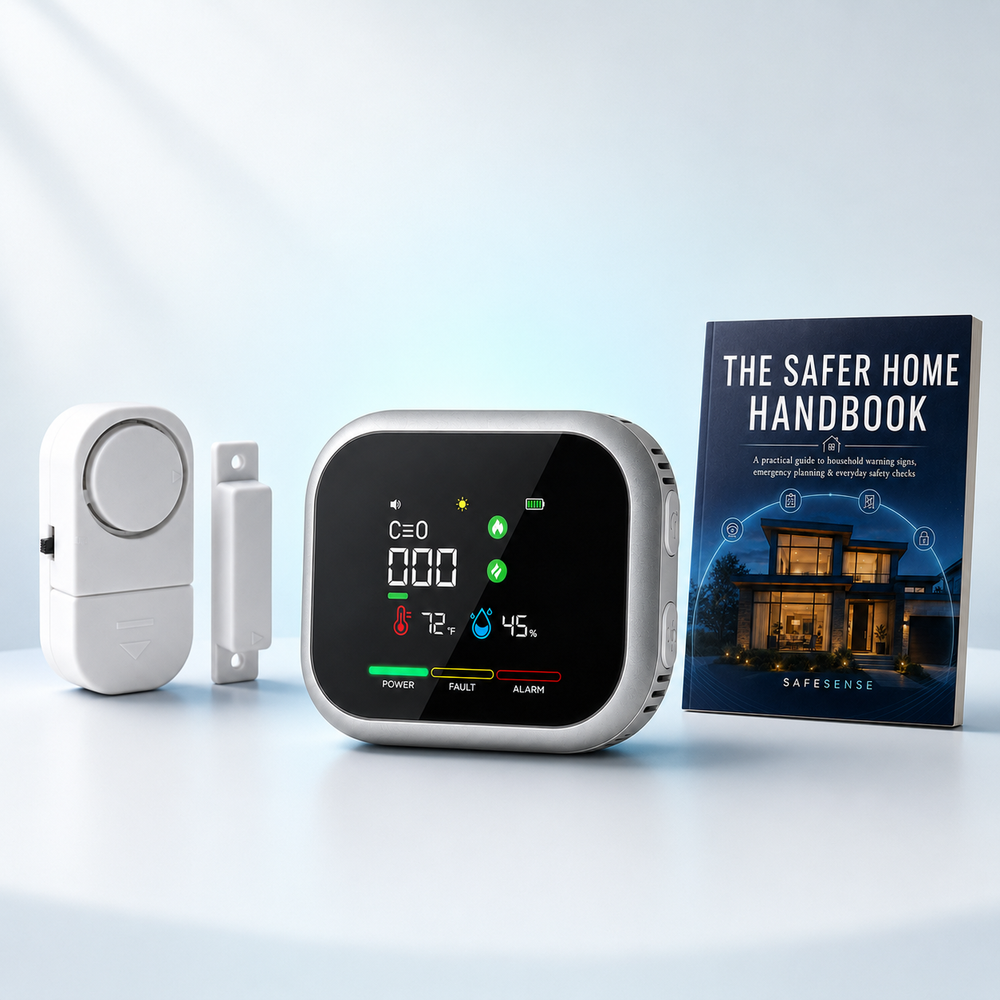
SafeGuard entry alarm and the Safer Home Handbook, free with every unit
Get 50% Off + 2 Free Gifts ➡️