
10 Things The Detectors Already In Your Rig Are Not Telling You
A plain look at what your factory alarms are built to do, and the gap they leave wide open.

Summary: the CO alarm in your rig is built to a standard that forbids it from making a sound below 30 ppm, and lets it wait up to four hours at 70. That is intentional. It is a last-resort device, not an instrument.
SafeSense plugs into any outlet and shows carbon monoxide, combustible gas, temperature and humidity as live numbers on one screen, with a 100 dB siren if a reading climbs. It is a second layer, not a replacement. Here is where it earns its outlet.
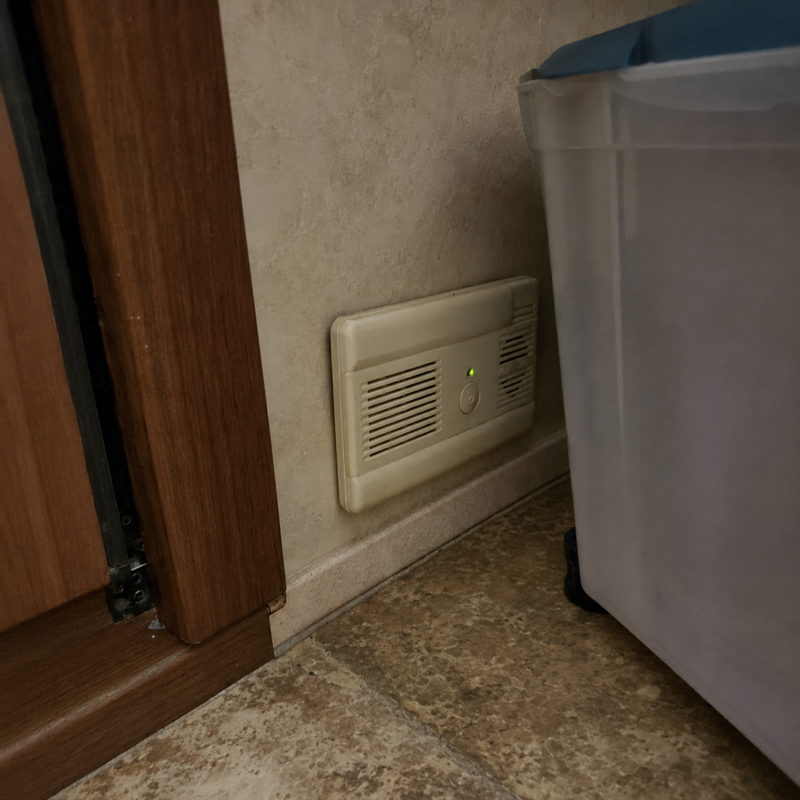
1. Your CO alarm is built to stay silent below 30 ppm
Every certified carbon monoxide alarm sold in America is built to UL 2034. That standard does not permit the alarm to sound below 30 ppm. It is not a defect or a cheap unit — it is written into the standard, to stop nuisance calls to fire departments and utilities.
For comparison: firefighters put on breathing apparatus at 25 ppm. Your alarm is legally forbidden from making a sound at that level, and it will stay quiet at a steady 30 ppm for thirty days straight.
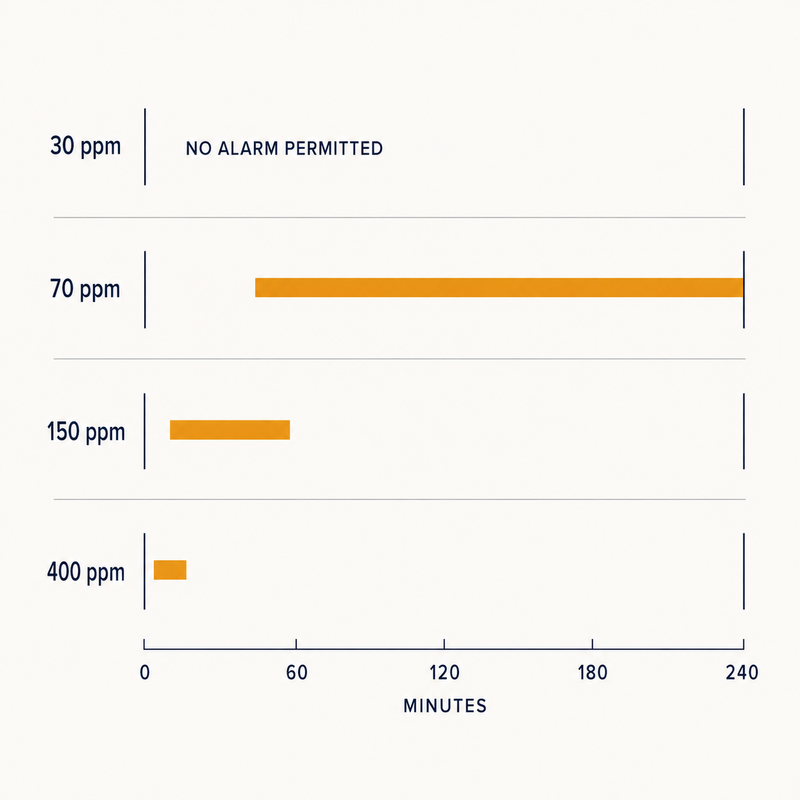
2. At 70 ppm it can legally wait four hours
The same standard sets the response times. At 70 ppm the alarm must not sound before 60 minutes, and it has up to 240 minutes to sound at all. At 150 ppm it gets between 10 and 50 minutes. At 400 ppm, between 4 and 15.
Those windows are deliberate and they work as designed — the alarm is there to stop you dying, and it does that job. It was never built to tell you what the air in your rig is doing on an ordinary evening.
“We already had the factory alarms, but I liked being able to see actual readings instead of only checking for a green light. Now I glance at it before we turn in for the night. It gives us a little more awareness without complicating our setup."
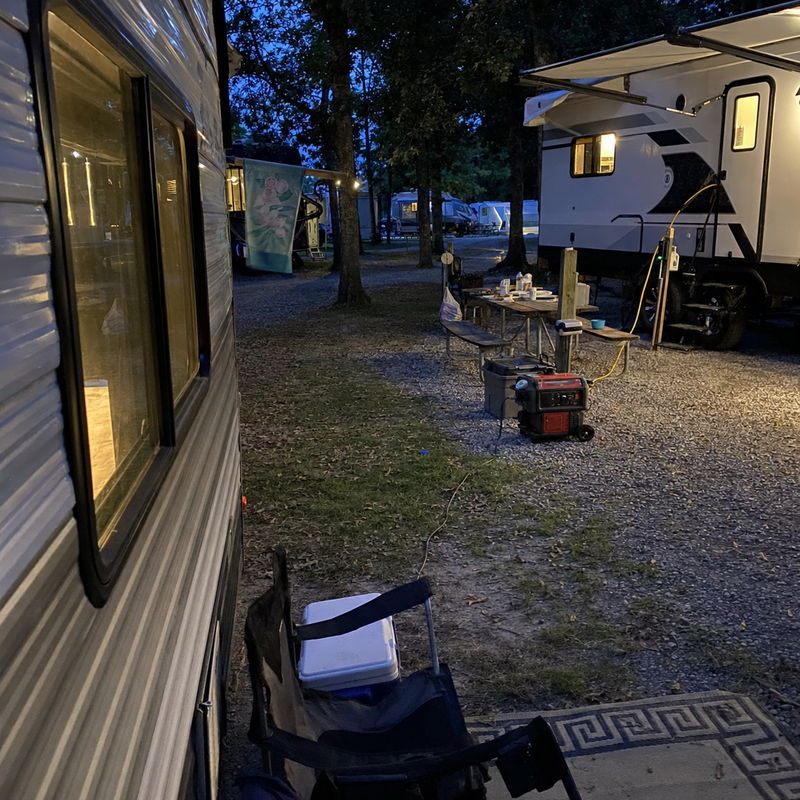
3. The generator that gets you is the one you did not set up
You can park yours twenty feet out with the exhaust pointed away. You cannot do anything about the rig that pulls in beside you at 9pm and fires up a generator eight feet from your bedroom window.
It is the most repeated warning on every RV forum, and it is the one variable you have zero control over. Wind shifts overnight. Nobody wakes you up to tell you.
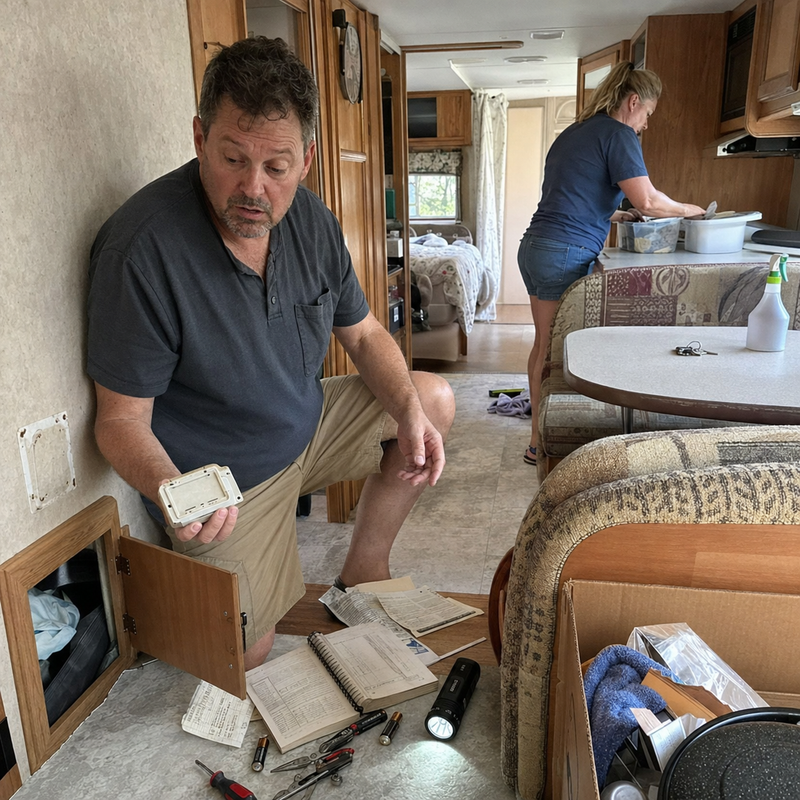
4. Your LP detector has an expiry date you have never looked at
The factory propane detector low on your wall has a manufacture date printed on it. Manufacturers rate them for five to seven years. Owners on the forums routinely report two or three before they go unreliable, sometimes one.
Go and look at yours. Most people have never crouched down and read the sticker, and an expired detector gives no warning that it has stopped being a detector.
5. False alarms already taught you to ignore it
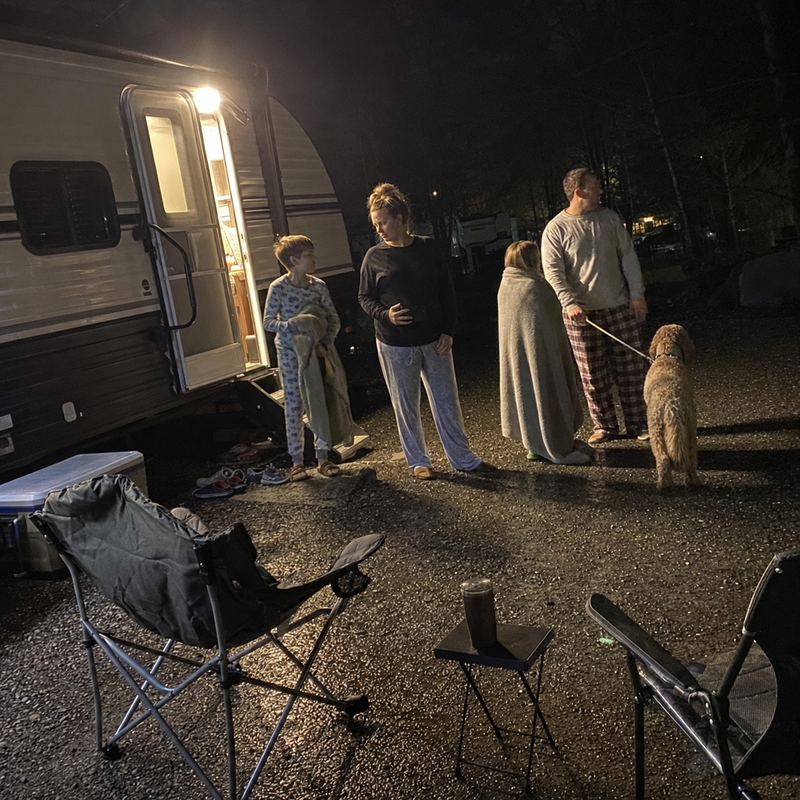
Ammonia off the fridge. Hairspray. Cleaning solvents. A low house battery. Any of them will set off an LP detector with no propane in the air, usually at an inconvenient hour.
So you mute it, or reset it, or pull the fuse and mean to deal with it later. Everybody does. The problem is that the habit does not distinguish between the false ones and the real one.
6. It keeps reading on travel days
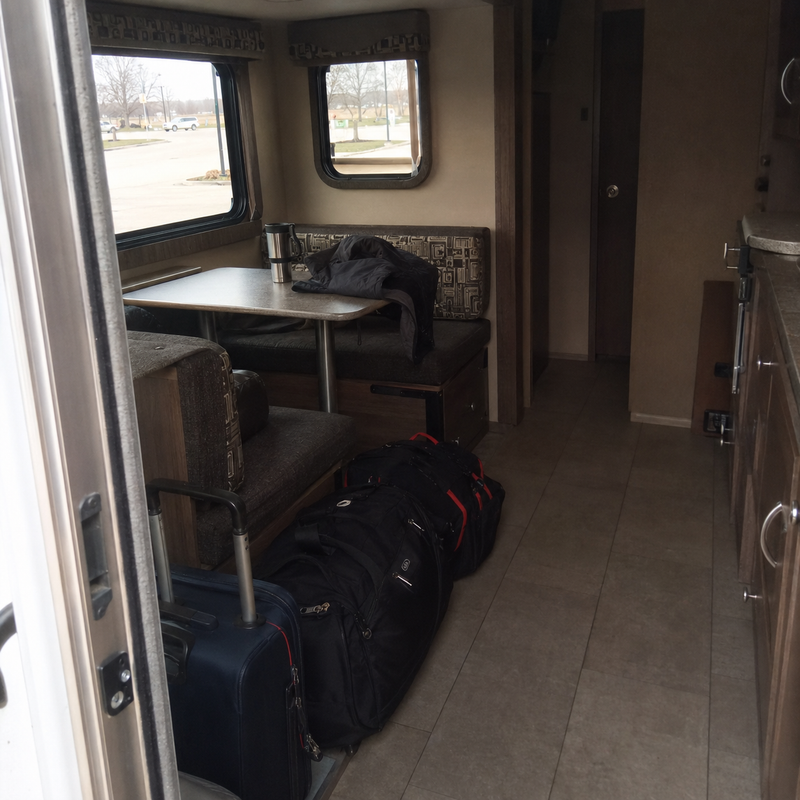
SafeSense runs off any 120V outlet — shore power at the campground, your generator, or an inverter. Plugged in, it monitors continuously.
Unplugged it runs up to 8 hours on its internal battery, which covers a driving day with the propane fridge on, a transfer between sites, or a campground power cut. It is not built to sit in unpowered storage for a season, and we would rather say so than have you find out in April.
“Our trailer gets humid surprisingly fast when the windows are closed and the heat is running. Being able to check the temperature, humidity and air readings in one place has been genuinely useful. We bring it on every overnight trip now.”
7. Three burners, a closed rig, and a fan that goes nowhere
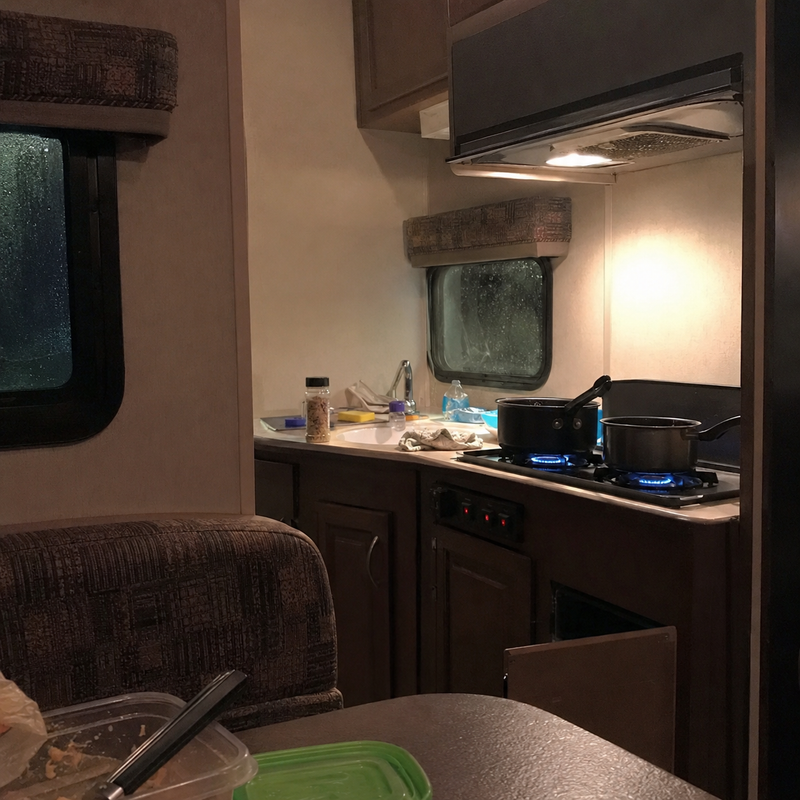
Propane burns clean when it burns completely. In a small sealed space with a recirculating vent that pushes air straight back into the room, combustion gets less complete and CO climbs while you cook.
It comes back down when you crack a window. The point is that right now you have no idea whether it went up at all, or how far, or how long it stayed there.
8. The ten-second check before everyone turns in
Most nights in an RV end with the same routine.
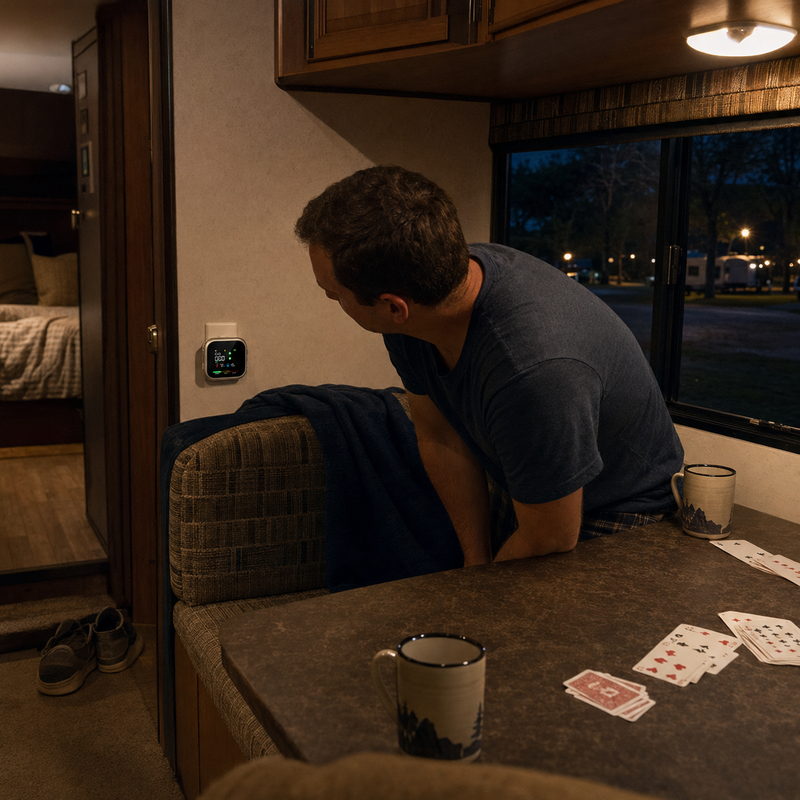
Stove knobs off. Door locked. Shoes brought inside. One last look around the campsite before the lights go out.
SafeSense adds one more simple step: glance at the live readings on the screen.
You are not searching for a problem or trying to interpret complicated data. You are establishing what the conditions inside your rig look like before everyone falls asleep so if something begins changing overnight, you have more than a single green light to rely on.
It takes seconds, requires no complicated setup, and quickly becomes as ordinary as checking the door before bed.
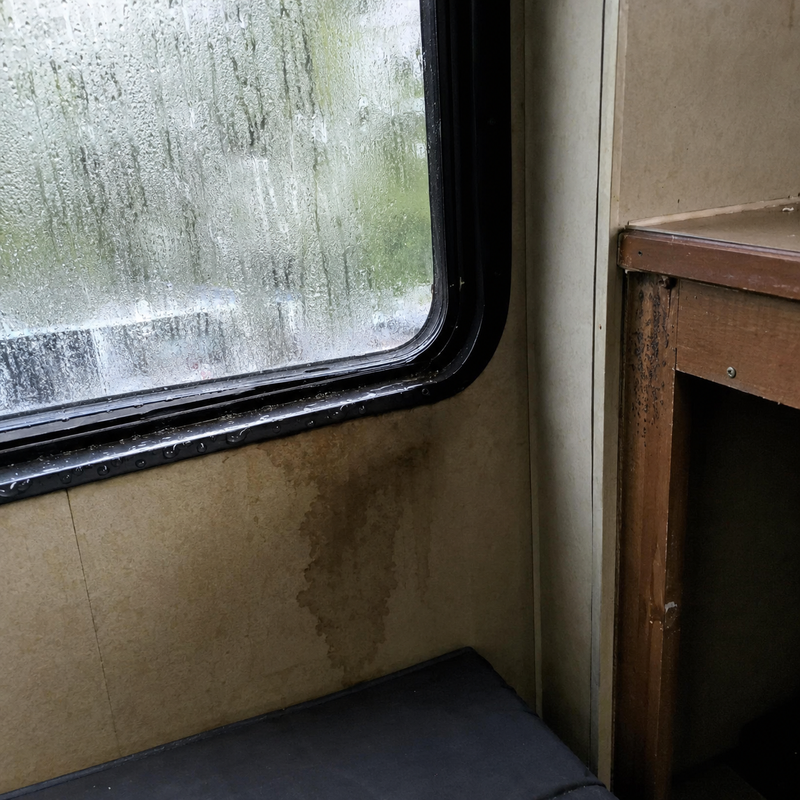
9. Why the cabinets smell in spring
Four people breathing, a hot shower and a pot on the stove put a remarkable amount of water into the air of a sealed trailer. When that air hits a cold window frame or an uninsulated wall, it condenses. Left alone through a shoulder season it becomes mould, soft wood and rust.
Humidity is the one reading on SafeSense that needs no interpretation at all. Above 60 percent and you want a vent open or a fan running.
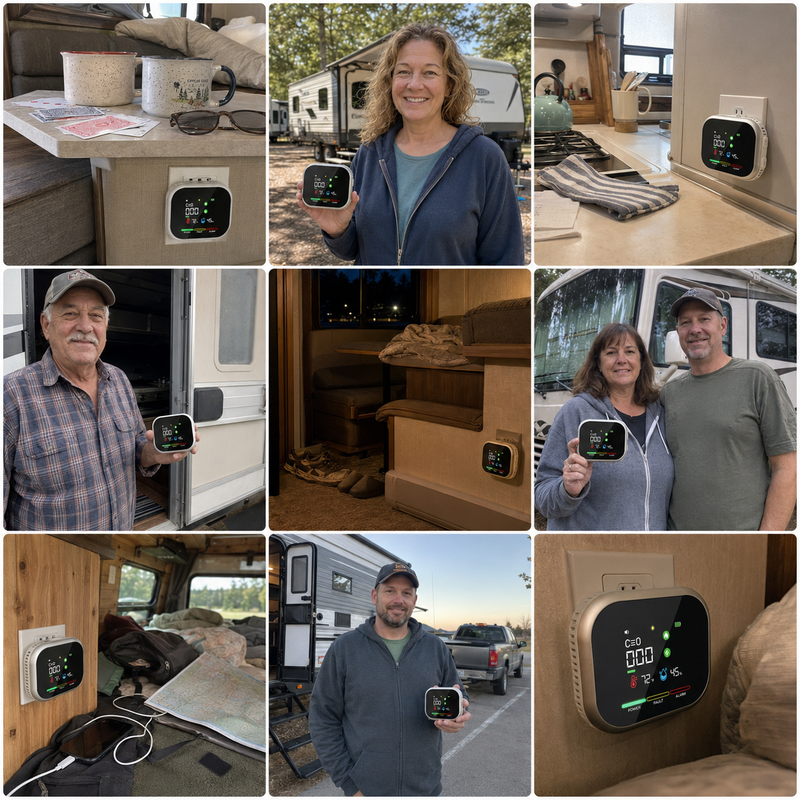
10. Join the 1000+ rigs already running one
Most of them aren’t nervous people. They’re RV owners who winter south. Families spending their first night in a used trailer. Full-timers parked beside generators they don’t control. People who simply wanted more information than a single green light could give them.
You read all ten. Something in your rig has been bothering you.
The galley, the bunk end, the storage bay. Start with the one you have been meaning to look at.
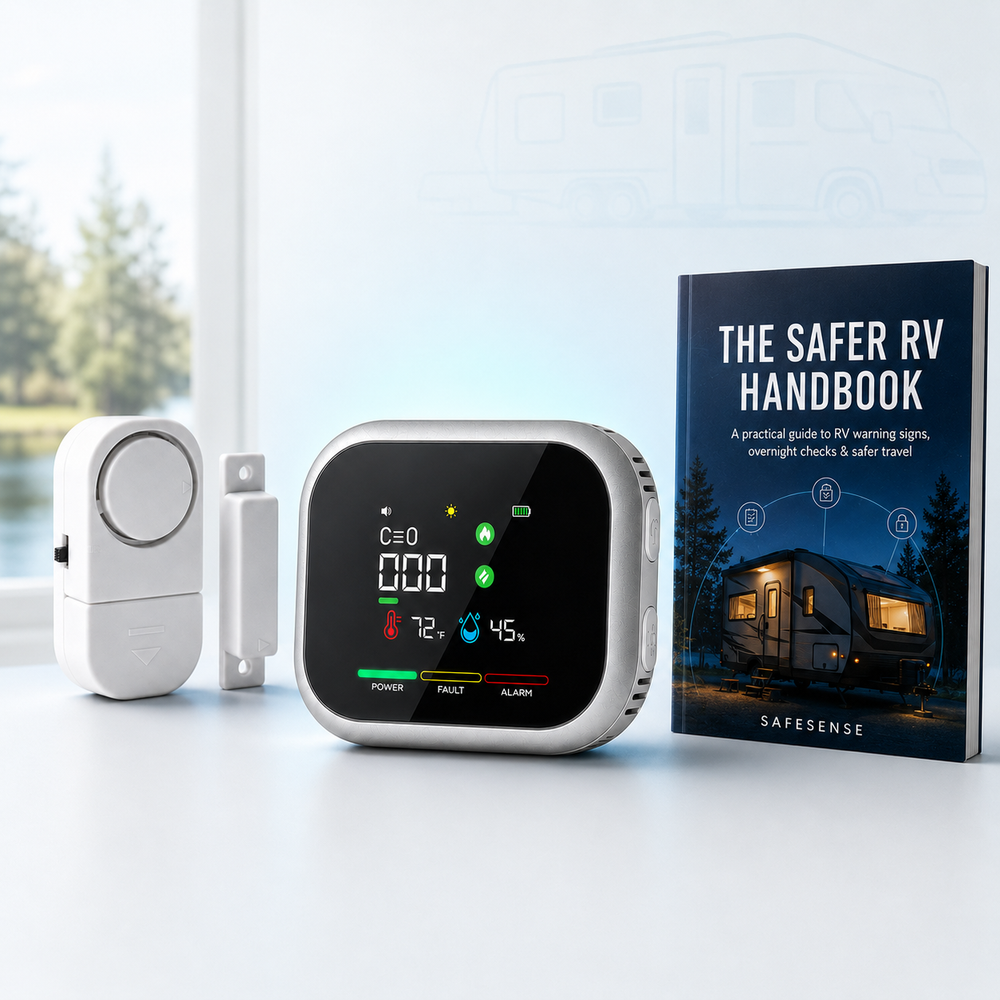
SafeGuard entry alarm and the Safer Home Handbook. Multi-unit pricing available.
YES, GET 50% OFF + FREE GIFTS ➡️